Best sensory toys for autism in 2026
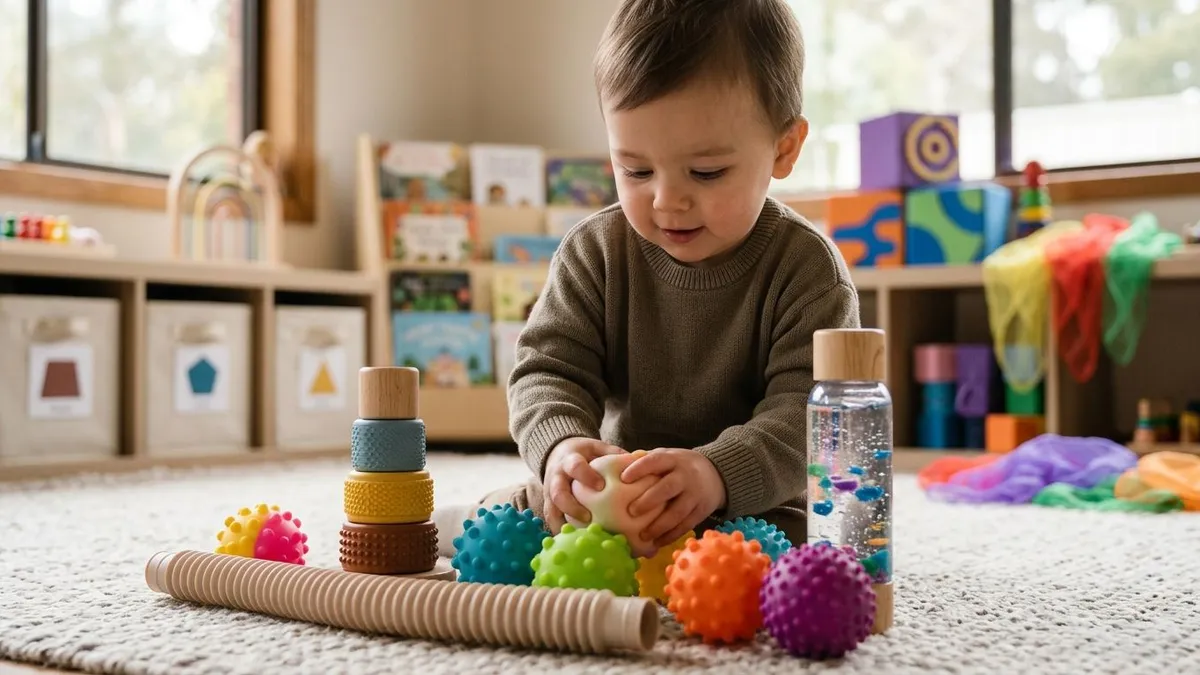
Start here: our full guide to Sensory differences in autistic children.
Best overall: a one-piece silicone pop-it for portable tactile play. Best for quiet squeezing: a sealed squeeze ball. Best for children who chew: a purpose-made chewable toy. This 2026 guide compares sensory toys for autism by the input a child seeks, the setting where they will use the toy, and the safety checks that matter before you buy.
- Best sensory toys for autism: start with a one-piece silicone pop-it for portable tactile play.
- Choose a sealed squeeze ball for quiet hand pressure and a purpose-made chewable for chewing.
- A toy can offer an activity your child likes; it does not treat autism.
- Check small parts, cleaning needs, and your child's response before making a toy part of a routine.
Why this matters
The best sensory toy is not the one with the longest list of features. It is the one your child wants to use, can use safely, and can set aside when the activity is over. In 2026, start with an observation, not a product claim: does your child reach for something to press, squeeze, chew, watch, or move on?
Sensory preferences differ between children and across settings. A child who likes a click at home might need a quieter option in class. A child who enjoys watching bubbles might not want to hold the wand. ActNowASD is a free, sourced reference for US parents and carers; use the same practical approach here by writing down what your child chooses and what they avoid.
Name the input before you shop: Touch, Pressure, Oral input, Visual movement, or Whole-body movement. Those are descriptions of activities, not diagnoses. If an activity causes distress, stop and try a different one rather than insisting your child get used to it.
What makes the best sensory toys for autism?
Use these criteria to judge any toy on the shortlist. A good match on one criterion does not cancel out a safety problem on another.
- Fit with the activity: Does your child actually press, squeeze, chew, watch, or move in this way? Watch what they choose without prompting.
- Safety for the child: Check age labeling, small or detachable parts, damage, and whether your child puts objects in their mouth. Supervise activities that need it.
- Fit with the setting: A toy for a classroom desk has different noise and space limits from one used in a living room.
- Control: Can your child start and stop the activity? If you control a bubble wand, watch whether your child still enjoys it.
- Cleaning and condition: Read the maker's cleaning directions. Replace an item that tears, leaks, or sheds pieces.
- Ease of trying it: Start with one activity and observe the response. Buying several unfamiliar toys at once makes it harder to tell what works.
Best sensory toys for autism at a glance
| Toy type | Best for | Standout feature | Key limitation |
|---|---|---|---|
| One-piece silicone pop-it | Portable tactile play | Repeated pressing | The sound can distract others |
| Sealed squeeze ball | Quiet hand pressure | Squeezing without a repeated click | A damaged ball can leak |
| Purpose-made chewable toy | Chewing an object | Designed for oral use | Requires close checks for wear |
| Bubble wand | Watching moving bubbles | Visible movement you can pause | Needs adult handling and cleanup |
| Therapy ball | Seated movement | Movement through a larger object | Needs space and supervision |
The default choice for an undecided parent is a one-piece silicone pop-it, provided its age labeling and construction fit your child. It is easy to offer briefly and put away. That does not make it the right choice for a child who dislikes the sound or seeks movement rather than hand activity.
1. One-piece silicone pop-it: best sensory toy for portable tactile play
A silicone pop-it gives your child buttons to press and reset. Its repeated action makes it a straightforward first trial if your child already seeks finger-based play. Choose a one-piece design rather than assuming every toy sold as a fidget has the same construction.
One-piece silicone pop-it pros:
- Offers a clear, repeatable hand activity.
- Does not require an adult to run the activity.
- Is small enough to consider for a desk or bag, subject to the setting's rules.
One-piece silicone pop-it cons:
- The popping sound can make it a poor fit for a quiet classroom.
- It will not meet a child's need to chew or move their whole body.
Best for: A child who chooses pressing activities and wants something they can control. In 2026, check the actual toy for tears or loose additions before use; the material name alone is not a safety check.
Verdict: Buy if your child likes pressing and the toy's sound and construction fit where they will use it. Skip it if the clicking bothers your child or others.
2. Sealed squeeze ball: best sensory toy for quiet hand pressure
A squeeze ball turns hand pressure into a simple activity without the repeated click of a pop-it. It belongs on your shortlist if your child reaches for soft objects to grip. Look at the specific ball's surface and construction, not just the name on the listing.
Sealed squeeze ball pros:
- Gives your child something to grip and release.
- Is easier to use quietly than a clicking fidget.
- Needs no setup for a short trial.
Sealed squeeze ball cons:
- A punctured or split ball can release its contents.
- Its texture can feel wrong to a child who wants firm rather than soft pressure.
Best for: A child seeking quiet hand pressure while sitting or waiting. Check it before each use if your child bites, picks at seams, or squeezes hard enough to damage the surface. Do not hand over a leaking ball.
Verdict: Buy for quiet squeezing when the ball is intact and suitable for your child's age and habits. Skip filled or fragile designs if your child tends to break or mouth them.
3. Purpose-made chewable toy: best sensory toy for chewing
A chewable toy is an option when your child repeatedly puts objects in their mouth. Choose an item explicitly made for chewing; a squeeze ball, pop-it, or ordinary necklace is not a substitute. Read its use, cleaning, and supervision instructions before offering it.
Purpose-made chewable toy pros:
- Gives chewing its own designated object.
- Makes it easier to keep non-chew toys out of your child's mouth.
- Lets you check one item for wear as part of a routine.
Purpose-made chewable toy cons:
- Chewing wears materials down, so condition checks cannot be skipped.
- Necklaces or cords introduce separate safety concerns and do not suit every child or setting.
Best for: A child who seeks oral input and can use an age-appropriate chewable with the supervision they need. In 2026, do not treat a chewable as indestructible. Stop using it if pieces loosen or the surface breaks, and follow its maker's instructions.
If your child chews non-food items persistently, tell their clinician what they chew and whether they swallow any material. A toy choice does not answer a health or safety question.
Verdict: Buy a purpose-made option only when its labeling fits your child and you can inspect it regularly. Hold if you are unsure whether your child swallows pieces.
4. Bubble wand: best sensory toy for watching movement
A bubble wand offers something to watch rather than hold or squeeze. An adult can make bubbles, pause, and see whether the child wants the activity to continue. That makes it a useful trial for a child who seeks moving visual input without assuming they want a handheld fidget.
Bubble wand pros:
- Offers a visible activity with a clear pause point.
- Allows shared play without requiring the child to touch the wand.
- Can be stopped quickly when the child has had enough.
Bubble wand cons:
- Bubble solution needs adult handling and cleanup.
- It is a poor fit where wet floors, spills, or other people make bubbles impractical.
Best for: A child who enjoys watching movement and can take part in a supervised activity. Keep the solution according to its label, and put it away when play ends. Ask before blowing bubbles toward your child; watching from a distance still counts as participating.
Verdict: Buy for supervised visual play when you have a suitable space. Skip it as a classroom-desk toy or when your child dislikes bubbles near them.
5. Therapy ball: best sensory toy for seated movement
A therapy ball offers movement through a larger object. It is different from a hand fidget: your child needs room, a stable surface, and an adult who can supervise. Before buying one, decide where it would be used and how you would prevent a fall.
Therapy ball pros:
- Offers movement without adding another small object to hold.
- Lets you observe whether your child prefers movement to tactile play.
- Can be put away when the activity ends.
Therapy ball cons:
- Takes more room than the other options in this guide.
- Rolling or slipping creates a fall risk.
- Does not suit every child's balance or mobility needs.
Best for: A child who seeks seated movement and has a suitable, supervised space. If your child has balance, mobility, or other relevant medical concerns, ask their clinician or occupational therapist about an appropriate setup rather than copying a generic exercise.
Verdict: Hold until you have the space and supervision plan. Buy only when you can offer the activity safely.
How we ranked the toy types
This is a decision guide, not a claim that one toy produces better clinical outcomes than another. The order favors an activity that is simple to try and control, then separates the other toys by the distinct input they offer. The comparison uses the criteria above: activity fit, safety, setting, control, cleaning, and ease of trying it.
For ActNowASD readers, the useful question is not whether a product is marketed for autism. It is whether your child chooses the activity, tolerates it, and can use the object safely. A toy that stays in a drawer is not a better choice because its label sounds more specialized.
A 2026 safety check before you buy
Check the item's age label and inspect the exact toy, including attachments. In the US, the Consumer Product Safety Commission's small-parts rule, 16 CFR Part 1501, addresses choking hazards in toys and other articles intended for children under 3 years. Its test fixture is 1.25 inches wide and 2.25 inches deep. Those measurements explain a regulatory test; they do not mean every larger object is safe for every child.
Pay particular attention if your child mouths toys, pulls pieces off, or tries to swallow non-food items. A label on a package cannot tell you how your child will use the object. Choose for the child's actual behavior, inspect for damage, and supervise accordingly.
Before making a toy part of a routine, write a short note: what your child did, where they used it, and whether they wanted to stop. A dated notebook gives you something concrete to share with a teacher, clinician, or occupational therapist. It also helps you avoid confusing a toy your child selected once with one they regularly choose.
Which sensory toy should you choose?
Choose a one-piece silicone pop-it first if your child seeks finger-based play and the sound works in your setting. Choose a sealed squeeze ball instead for quiet hand pressure, a purpose-made chewable for chewing, a bubble wand for supervised visual play, or a therapy ball for supervised seated movement. Do not buy all five to find out what your child likes. Pick the activity you have already seen your child seek.
ActNowASD's parent-first approach also applies when a choice does not work: set the toy aside without treating your child's reaction as a failure. In 2026, the best sensory toys for autism are the ones that fit the individual child and the place they will actually be used.
FAQ
Is a pop-it better than a squeeze ball for an autistic child?
A pop-it fits repeated pressing; a squeeze ball fits quiet gripping. Watch which action your child chooses, and account for noise and the risk of a damaged squeeze ball.
Are sensory toys a treatment for autism?
No. A sensory toy is an activity or object, not a treatment for autism. Ask your child's clinician about concerns that affect health, safety, or daily life.
What sensory toy is appropriate for a child who chews?
Choose a purpose-made chewable that matches your child's age and use habits. Inspect it for wear, follow its instructions, and speak to a clinician if your child swallows non-food materials.
Are sensory toys safe for children under 3 years?
Safety depends on the specific toy and child. Check its age labeling and detachable parts; the US Consumer Product Safety Commission regulates small parts in articles intended for children under 3 years under 16 CFR Part 1501.
What sensory toy works in a quiet classroom?
A sealed squeeze ball is a quieter option than a clicking pop-it when a child seeks hand pressure. Check the school's rules and whether the item helps your child take part without distracting them or others.
How do I know whether my child likes a sensory toy?
Offer one activity briefly and watch whether your child chooses to continue or moves away. Note the setting and response so you can tell a consistent preference from a one-time reaction.
One last thing
The strongest 2026 recommendation is to pick three priorities before buying: the activity your child seeks, where the toy will be used, and the safety issue you need to check. ActNowASD serves parents from early questions through the teen years; the same three priorities work better than an autism label on a package because they start with your child.
Related guides
FAQ
What are the best sensory toys for autism in 2026?
A one-piece silicone pop-it is a practical first choice for a child who likes pressing objects. A sealed squeeze ball, purpose-made chewable, bubble wand, or therapy ball fits a different activity; choose by your child's behavior and safety needs.
Is a pop-it better than a squeeze ball for an autistic child?
A pop-it fits repeated pressing; a squeeze ball fits quiet gripping. Watch which action your child chooses, and account for noise and the risk of a damaged squeeze ball.
Are sensory toys a treatment for autism?
No. A sensory toy is an activity or object, not a treatment for autism. Ask your child's clinician about concerns that affect health, safety, or daily life.
What sensory toy is appropriate for a child who chews?
Choose a purpose-made chewable that matches your child's age and use habits. Inspect it for wear, follow its instructions, and speak to a clinician if your child swallows non-food materials.
Are sensory toys safe for children under 3 years?
Safety depends on the specific toy and child. Check its age labeling and detachable parts; the US Consumer Product Safety Commission regulates small parts in articles intended for children under 3 years under 16 CFR Part 1501.
What sensory toy works in a quiet classroom?
A sealed squeeze ball is a quieter option than a clicking pop-it when a child seeks hand pressure. Check the school's rules and whether the item helps your child take part without distracting them or others.
How do I know whether my child likes a sensory toy?
Offer one activity briefly and watch whether your child chooses to continue or moves away. Note the setting and response so you can tell a consistent preference from a one-time reaction.
Related guides
Reference pages on this site — reviewed, sourced, and written for parents.